
Location note: This guide is written with local clients in mind, including those in Littleton, Colorado—where choosing the right plan matters as much as the treatment itself.
Creating a great first medspa experience starts with one simple goal: selecting best treatments for first-time medspa clients that match your skin, your timeline, and your comfort level—without guesswork. If you’re new to injectables, chemical peels, microneedling, laser-based skin rejuvenation, or hair restoration options, you may have questions like: What should I book first? Will it hurt? How long do results take? And how do I avoid overdoing it?
In this premium, step-by-step guide, you’ll learn how first-time clients should choose treatments, what to expect at each stage, and how to build a personalized plan with a qualified provider like Beauties and Beasts. You’ll also see practical “best first picks” across common goals—wrinkle reduction, acne and pigmentation support, skin tightening, facial contouring, and hair regrowth—so you can walk into your appointment feeling confident.
As you read, keep in mind that every body responds differently. Your best path is the one that’s safe, realistic, and aligned with your desired look—plus your schedule and recovery comfort.
Why first-time medspa clients need a “best treatment” strategy
Medspas offer many services, but “best” is not the same for everyone. For first-timers, the best approach is usually the one that:
- Targets your primary concern (fine lines, volume loss, acne marks, pigmentation, unwanted hair, thinning hair, or texture).
- Fits your timeline (events, vacations, work schedule, and downtime tolerance).
- Uses a conservative starting plan that can be refined after you see results.
- Matches your skin type and medical history—especially if you’re prone to sensitivity, hyperpigmentation, or scarring.
At FlowGeniQ Digest, we emphasize education-first decision-making because informed clients tend to have better outcomes and smoother recovery experiences.
What “safe” looks like during your first visit
Safety isn’t just about the product—it’s about the process. A responsible first visit typically includes a thorough intake, a skin assessment, and a treatment plan that explains expected timing, potential side effects, and realistic results.
According to the American Academy of Dermatology (AAD), people should seek care from qualified professionals and discuss risks, benefits, and alternatives before cosmetic procedures (American Academy of Dermatology).
How to choose the best treatments for first-time medspa clients (step-by-step)
Step 1: Identify your “primary concern” and desired outcome
Start by answering: What do I want to change most?
- Wrinkles and expression lines: often benefit from neuromodulators.
- Volume loss and facial balancing: often benefit from dermal fillers.
- Texture, acne marks, and glow: often respond to microneedling or chemical peels.
- Hair thinning: may be addressed with hair restoration options.
- Unwanted hair: typically requires multiple sessions because hair grows in cycles.
Step 2: Decide your downtime comfort level
First-time clients often underestimate how much “downtime” can vary by treatment. Some services have minimal interruption; others may involve temporary redness, swelling, or sensitivity.
A helpful question to ask your provider: “What’s the most likely recovery timeline for my skin and goal?”
Step 3: Match the treatment to your timeline
Different modalities show results on different schedules. For example, injectables often show gradual improvement over days, while skin rejuvenation may require a series of sessions for optimal texture and tone.
Step 4: Choose a plan that can be adjusted
One of the best strategies for first-timers is to start with a conservative approach and adjust as you learn how your skin responds. Your provider may recommend a “build” schedule—especially for skin rejuvenation and hair regrowth.
Step 5: Prepare for the appointment (and aftercare)
Preparation is part of the treatment. Common guidance may include avoiding certain skincare actives before procedures, following SPF recommendations, and planning your first appointment when you can comfortably recover if needed.
Best first-treatment picks by goal (what to book first)
Below are practical starting points—still personalized by your provider—so you can decide what’s most likely to help you first.
1) Wrinkle reduction and expression-line support
If your primary concern is fine lines or expression lines (for example, forehead lines or “crow’s feet”), neuromodulators are commonly the first step for many first-time clients.
At Beauties & Beasts Med Spa, the provider offers Botox, Dysport, Letybo, & Jeuveau options to support wrinkle reduction with a tailored plan. Learn more here: Botox, Dysport, Letybo, & Jeuveau.
Best for first-timers because: results tend to develop gradually, and dosing can be adjusted in follow-ups.
2) Facial volume restoration and subtle contouring
Many first-timers worry that fillers will look “overdone.” That’s often a planning issue, not a filler issue. The best first filler plan typically focuses on natural facial balancing and conservative placement.
If your goal involves smoothing, contouring, or lip enhancement, consider starting with a provider-led evaluation of your facial proportions. For dermal filler and lip filler options, see Dermal and Lip Fillers.
Best for first-timers because: you can build gradually, and your provider can select products and placement based on anatomy.
3) Acne scars, texture, pigmentation support, and “glow”
Skin rejuvenation is often the safest “starter category” for clients who want improvements without changing facial expressions much. It can support:
- texture refinement
- collagen stimulation
- tone balancing (including support for certain pigmentation concerns)
- overall radiance
Common first-time friendly options include chemical peels, microneedling, RF microneedling, IPL treatments, and laser resurfacing—selected based on your goals and skin type.
4) Skin tightening and contouring support without surgery
If you’re seeking a firmer look or more defined facial contours, body and facial tightening treatments can be a strong fit—especially when paired with skin-care maintenance.
Explore the category here: Body Contouring.
Best for first-timers because: you can often choose a non-surgical plan with a clear number of sessions and measurable goals.
5) Hair thinning and regrowth support (including non-surgical options)
Hair restoration can feel intimidating for first-time clients, but it’s also one of the most mission-driven categories. The best first move is a consultation that evaluates your hair loss pattern and sets realistic expectations.
If you’re exploring non-surgical hair restoration, you can review Hair Regrowth Solutions.
Best for first-timers because: you can plan a series with clear milestones.
6) Unwanted hair removal
Laser hair removal is a popular first medspa category for clients who want smoother skin with fewer daily steps. The key is understanding that hair grows in cycles, so most clients need multiple treatments.
According to the U.S. Food & Drug Administration (FDA), laser procedures require proper safety precautions and appropriate device use (U.S. FDA – Medical Devices).
What to expect at your first appointment (and after)
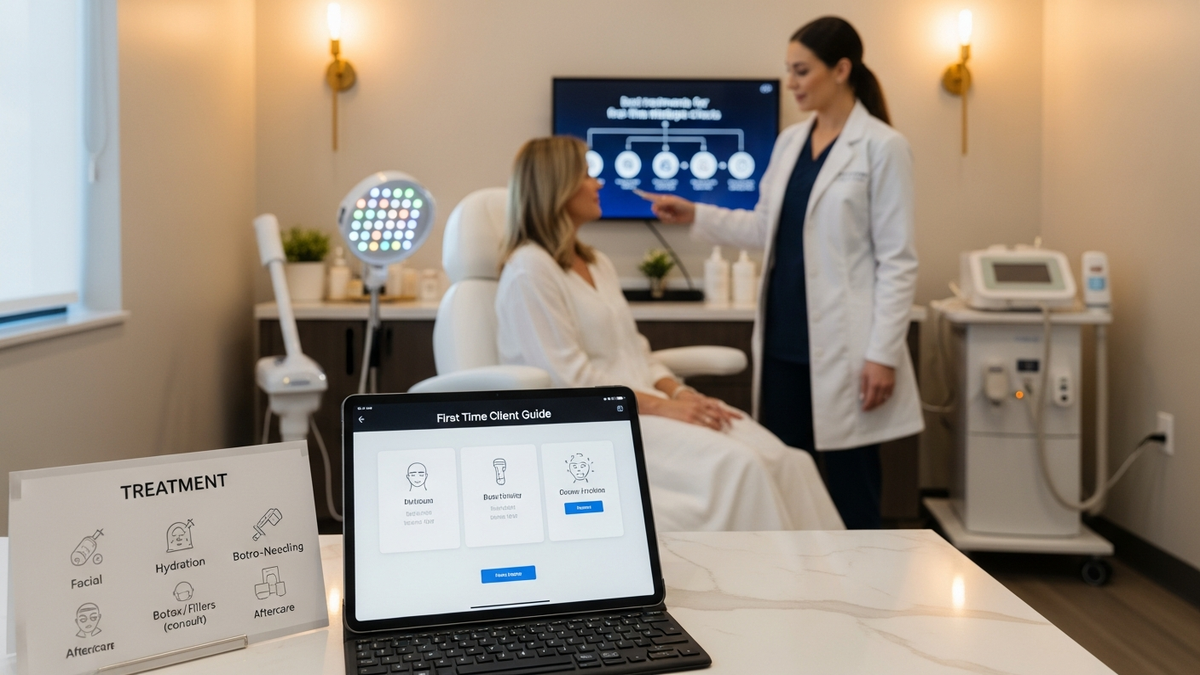
During the consultation: the “right questions” checklist
To get the best treatments for first-time medspa clients, ask questions that clarify fit, safety, and outcomes. Consider bringing a short list:
- What treatment is best for my primary concern?
- What will the results look like—and when will I see them?
- What are the most common side effects for my skin type?
- How many sessions are typically recommended?
- What should I do (and avoid) before and after treatment?
- Is this a conservative starting plan that can be adjusted?
Aftercare basics that protect results
Aftercare varies by service, but common best practices include:
- Using gentle, non-irritating skincare as directed
- Applying sunscreen consistently (especially after skin rejuvenation)
- Avoiding harsh actives or heat exposure when advised
- Following any post-procedure instructions for swelling, redness, or sensitivity
Because every treatment has different recovery windows, always follow your provider’s specific protocol.
How long results take (quick guide)
Here’s a simplified expectation framework first-time clients can use:
- Injectables: improvement often develops gradually over several days.
- Skin rejuvenation: results may build over multiple sessions; glow can appear early, with deeper texture changes later.
- Hair restoration: regrowth is typically staged over months, based on your plan.
- Laser hair removal: multiple sessions are generally needed due to growth cycles.
How many sessions should a first-time client plan for?
The answer depends on the category you choose. Many first-time clients do best with a staged plan—especially for skin and hair services.
Injectables: often a starting point, then fine-tuning
For neuromodulators, many clients schedule follow-up assessments to adjust dosing. For dermal fillers, your provider may recommend a conservative “first pass” with later refinement if needed.
Skin rejuvenation: series-based planning is common
Microneedling, RF microneedling, IPL, and laser resurfacing often involve multiple sessions to address texture, tone, and collagen support. Your provider will recommend a schedule based on your goals and skin sensitivity.
Hair restoration: milestone-based planning
Hair regrowth usually requires ongoing treatment phases and realistic expectation-setting. Your provider can help you understand what “progress” looks like at different timepoints.
Laser hair removal: plan for growth cycles
Hair removal typically requires multiple appointments because hair follicles cycle through phases. Your provider can estimate the number of sessions based on your hair and skin characteristics.
Choosing between popular treatment categories: a quick comparison
If you’re unsure where to start, use this comparison to narrow your options.
Injectables vs. skin rejuvenation
Injectables often focus on expression lines and facial balancing. Skin rejuvenation often focuses on texture, tone, and collagen support.
Many first-time clients benefit from combining categories later—but starting with one “primary goal” category can make the experience easier to manage.
Non-surgical contouring vs. fillers
Non-surgical contouring and tightening may support body definition and firmness. Fillers support facial volume and contour. The best choice depends on whether you need structural facial balancing or skin tightening/contour support.
Hair regrowth vs. hair removal
Hair regrowth supports thinning hair and restoration goals, while hair removal targets unwanted hair reduction. It’s important to choose the correct category for your outcome.
Local context: what Littleton, Colorado clients should know
In Littleton, Colorado, seasonal changes and sun exposure patterns can affect skin sensitivity and pigmentation concerns. First-time clients often do best when their provider builds a plan that includes:
- SPF consistency and sun avoidance guidance
- seasonally appropriate skin-care support
- realistic scheduling for recovery
If you’re planning treatments around an event, tell your provider early so the plan can be timed for your best results.
Evidence-informed expectations (with sources)
It’s normal to want numbers. While individual results vary, evidence can help you set realistic expectations.
Statistic: procedure volumes reflect ongoing demand
According to the American Society of Plastic Surgeons (ASPS), minimally invasive cosmetic procedures remain widely performed in the U.S., highlighting the importance of choosing qualified providers and evidence-based care (ASPS Press Releases).
Statistic: laser hair removal is cycle-dependent
While exact outcomes vary, clinical guidance emphasizes that laser hair removal generally requires multiple sessions because hair follicles cycle through growth phases. The FDA stresses the need for appropriate device selection and safety considerations for laser procedures (U.S. FDA – Medical Devices).
Evidence: dermatology safety and professional guidance
The AAD encourages patients to seek professional medical guidance for cosmetic concerns and to understand risks and benefits before treatment (American Academy of Dermatology).
Common first-time mistakes (and how to avoid them)
- Starting too many things at once: It becomes harder to know what worked and what caused side effects.
- Choosing based on trends: Your skin type and goals should lead the plan.
- Skipping aftercare: Aftercare protects outcomes, especially after skin rejuvenation.
- Not disclosing health history: Full disclosure helps safety planning.
- Expecting instant “permanent” results: Many aesthetic improvements are temporary or series-based—your plan should match that reality.
Authoritative guidance: who should guide your plan?
Dr. Danielle Sanders, DNP-C (Owner/Primary Provider at Beauties & Beasts Med Spa) leads individualized care plans focused on safety, modern techniques, and natural-looking results for first-time and returning clients. This editorial guide is designed to help you arrive prepared—so your consultation can be efficient, personalized, and confidence-building.
Frequently Asked Questions
What are the best treatments for first-time medspa clients?
The best first treatments typically depend on your primary concern—such as expression-line support with neuromodulators, volume balancing with dermal fillers, or texture and tone improvement with microneedling or chemical peels. A conservative plan with clear expectations helps first-time clients feel confident and reduces the risk of overcorrecting.
Will injectables or skin rejuvenation hurt?
Comfort varies by treatment type and your sensitivity level. Many providers use topical numbing for skin procedures and can tailor techniques for injectables, but you should discuss pain expectations and options during your consultation.
How long do results last for common medspa treatments?
Longevity depends on the service and your individual response. Neuromodulators often last several months, while fillers are temporary and gradually break down over time; skin rejuvenation results may build across sessions and require maintenance.
How many sessions will I need?
Some treatments may require only one visit, while others are series-based. Skin rejuvenation and laser hair removal commonly involve multiple sessions due to healing timelines and growth cycles.
What should I do before my first appointment?
Plan for a thorough intake, disclose your medical history and current skincare, and ask your provider what to stop or avoid beforehand. Following pre- and post-care instructions is one of the most effective ways to support results and minimize side effects.
If you’re ready to build a personalized plan using the best treatments for first-time medspa clients, schedule your consultation with Beauties & Beasts Med Spa.
Prefer to explore first? You can also review services like dermal and lip fillers and Botox, Dysport, Letybo, & Jeuveau to understand how your goals align with treatment options.
Medical Information Disclaimer
This content is provided for general educational purposes only by FlowGeniQ Digest. It is not a substitute for professional advice, diagnosis, or treatment. Readers are advised to consult qualified professionals for personalized recommendations.